Trending Articles

Carry-On Rules Are Getting Stricter for Photographers in 2026: Here's How to Adapt Your Kit

If you fly with a camera bag, 2026 is the year the gate finally caught up with you. The bag that "always made it on" for the last five years is now getting weighed, measured, and gate-checked with a consistency that did not exist before. For most travelers this is an annoyance. For photographers it is a real problem, because a camera kit is the densest, heaviest, and least checkable thing most people carry. A few bodies, a couple of fast lenses, batteries, and a charger can push past a 7-kilogram (15.4 lb) cabin limit before you have packed a single shirt, and unlike a sweater, you cannot exactly stuff a 70-200mm into the overhead and hope.
How to Choose Between APS-C and Full Frame as a Beginner

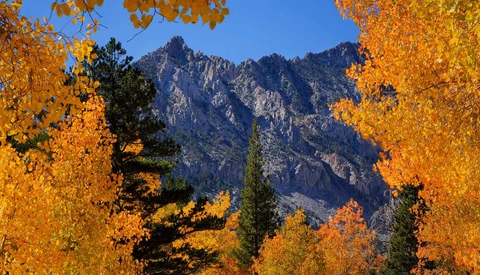
One of the first real decisions a new photographer faces is sensor size, and it arrives wrapped in more anxiety than it deserves. The internet will tell you that full frame is "professional" and APS-C is "entry level," as if the sensor inside the camera decides whether your photos are any good. It does not. What sensor size actually changes is your reach, your low-light headroom, the amount of background blur you can get, the size and weight of your kit, and how much you spend, both now and over the years you keep shooting. Understanding those tradeoffs honestly is what lets you pick the right tool instead of the most expensive one.

The Best Premium Compact Cameras in 2026

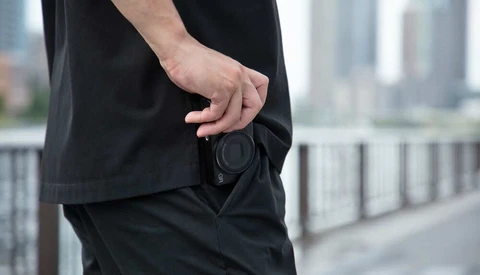
The compact camera is having a genuine revival, and it has caught the industry slightly off guard. Models that sat ignored for years are now selling out, prices are climbing, and manufacturers that abandoned the category are scrambling back into it. The reason is simple: people who grew up shooting on phones increasingly want something that feels deliberate, looks distinctive, and delivers image quality a phone cannot match. A premium compact earns its place by beating your phone at one of four things: image quality, reach, video, or the sheer pleasure of carrying and using it.

Adobe Is Buying One of the Last Good Things in Photo Editing

Adobe announced on June 25 that it has agreed to acquire Topaz Labs, the Dallas company whose denoising, sharpening, and upscaling tools quietly became part of how a huge number of photographers finish their work. Neither side put a number on the deal. Closing is targeted for the back half of 2026, assuming regulators sign off. Adobe says Topaz CEO Eric Yang will stay on, the standalone apps will keep running, and the underlying models will eventually flow into Firefly, Firefly Services, and Creative Cloud apps.

The Most Underappreciated Trend in Lens Design Right Now

For roughly two decades, the standard zoom lens started at 24mm. Before that, it started at 28mm or even 35mm. The 24-70mm f/2.8 became the default in the early 2000s and stayed there so long that the starting focal length became invisible. 24mm was simply where a standard zoom began, and nobody questioned it because there was nothing to question.

Hasselblad Names Seven New Masters in Its 2026 Photography Competition

Seven photographers have been named Hasselblad Masters for 2026, chosen out of 70 finalists that the competition pulled from a pool exceeding 108,000 submissions sent in from 160 countries and regions. The seven categories this year were Landscape, Architecture, Portrait, Art, Street, Wildlife, and Project//21, with one winner in each.

The Cheapest Way to Expand Your Micro 4/3 Lens Collection

The Panasonic Lumix GX8 is a Micro 4/3 camera, and that small sensor size gives it one genuinely unusual advantage: you can mount almost any lens ever made on it, from almost any manufacturer, as long as you have the right adapter.

Raw vs. JPEG at the Grand Canyon: What Four Cameras Actually Showed

Choosing between raw and JPEG isn't just a technical preference; it directly affects how much you can recover and reshape an image in post. This helpful video tests this in a setting where the stakes are real: a Grand Canyon sunset, shot across four current-generation camera bodies.

15 Beginner Photography Mistakes (and the One-Line Fix for Each)

Every photographer makes these. The difference between someone who improves fast and someone who plateaus isn't talent; it's how quickly they stop repeating the same fifteen errors. None of these require new gear or more money to fix. Most take a single setting change or a shift in habit. 

Why Separation Makes or Breaks a Wide Angle Forest Shot

Photographing palm trees on a tropical coastline sounds straightforward until you're actually standing in front of a tangled cluster of trunks, messy sand, and scattered coconuts with no obvious composition in sight. Finding a shot that goes beyond a simple silhouette takes deliberate thinking about separation, foreground interest, and depth.

The Art of Seeing: Finding Your Visual Voice

“What style do you shoot in?” or “I see a lot of [insert any photographer's name here] in your work.” These types of questions and statements, I'm sure, have been presented to you, and if you've ever wondered why, we can find out together.

How to Actually Use an 85mm Lens for Better Portraits

Buying an 85mm lens is one of the most common moves in portrait photography, and it's also one of the most misunderstood. The lens has a reputation for good reason, but the way most people use it wastes most of what makes it worth owning.

Before Cartier-Bresson, There Was André Kertész

Long before many of the photographers we now refer to as masters of the art of photography, André Kertész was quietly changing what photography could be. Born in Hungary in 1894, Kertész wasn't chasing the spectacle or the drama. He found meaning in ordinary moments such as a shadow stretching across a wall, a lone figure crossing a courtyard, a fork resting on a plate, sunlight pouring through a window. He understood something that still resonates today: that a photograph doesn't need a grand subject to carry emotional impact.

Testing the 7Artisan 35mm f/2.8 LTM Lens

To paraphrase a favorite pair of authors of mine: once is never, twice is always. Not sure where the third and fourth times something goes wrong rates. 

Because that's how many times my Leica MP pulled my bulk-loaded film out of the canister. Not the camera's fault; instead, the cheap tape I've been using didn't seem to be holding up to the stress of those final few tugs of the film advance. The first time it was something important: two dozen arrests during a protest downtown. Thankfully the rest were less important, mostly technical shots for this lens review.

Vulva Photographer Shows Women Their Genitals Are Beautiful

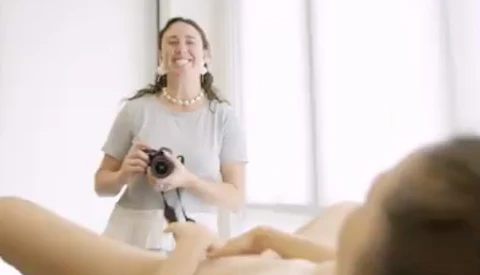
Photography can be a powerful tool for good. Photographer Ellie Sedgwick recognized that, and she's using her camera skills for a coffee table book on vulvas and to encourage body positivity, curiosity, and understanding.

Saving Your Photos Wrecked by Smoke From Nearby Wildfires

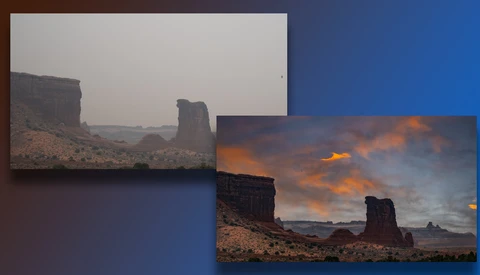
In one of my great examples of bad timing, a friend and I headed to southern Utah a few days ago. We were aware of spreading wildfires in the eastern part of the state, but where we were going, SE Utah, things were reported to be good. 

Why Terminator 2's Visual Effects Hold Up 30 Years Later

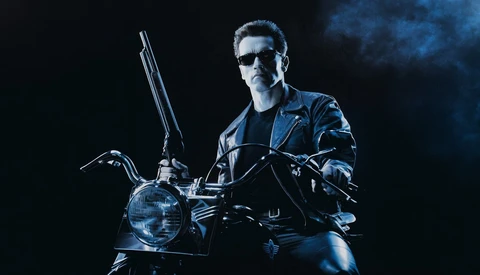
Terminator 2: Judgment Day turns 35 this year, and it still looks better than most action films being made right now. The reason isn't budget or nostalgia. It's a set of deliberate filmmaking decisions that hold up under scrutiny.